


- Englisch
Organizational structure
In this lesson we will discuss different organizational structures and new words
- Theorie mit Übungen
- Mittelstufe
 Englisch

In this lesson we will discuss different organizational structures and new words
Englisch
This class is about digital nomads and remote work. Also in this lesson we will discuss modal verbs and see how to use them. We will also have some speaking practice.
Englisch
In this class we will discuss renting an appartment
Englisch
Introductory class to understand the level of English
Englisch
In this lesson, you will find out what is special about marriage in different countries. You will also learn what to say if you end up having a misunderstanding with a person from abroad.
Englisch

In this class we will discuss security and passwords and revise rules about Gerund/Infinitive
Englisch
--
Englisch
In this class we will talk about traditions and revise zero, first and second conditionals
EnglischIn this class we will revise conditionals and talk about cinema
Englisch
In this lesson we will discuss small talk and practice present simple and present continious
Englisch
FCE grammar + listening+ reported speech + passive voice
Englisch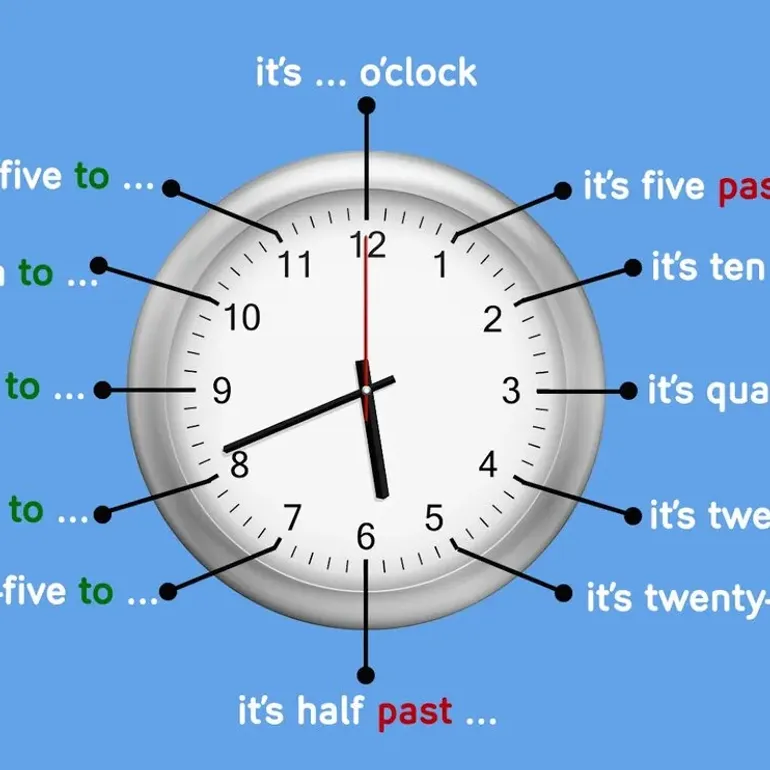
This lesson helps learners understand how to ask for and tell the time in English. Students will learn key expressions such as o’clock, half past, quarter past/to, and how to use a.m. and p.m. They will also practice common questions and answers: “What time is it? – It’s …” and “When does it start? – At …”.
Englisch

English is full of look-alike and sound-alike words that easily trip up even confident speakers and writers. This lesson breaks down two frequently confused pairs: disassemble vs. dissemble and envelop vs. envelope. By exploring their origin, exact definitions, and silent letter differences, you'll learn how a single letter or syllable completely changes a word from a physical action into a cover, or from a lie into taking something apart. Perfect for refining your writing accuracy and vocabulary precision.
Englisch
Now that you understand the Russian letters and numbers, we will begin to learn some basic Russian phrases that you will commonly use as part of everyday communication. We will not attempt to introduce any grammar in this lesson. It is more important to learn some basic communication skills in Russian. Once you have a 'feel' for the language, you will find it easier to understand how the grammar works. When you were young, you learnt to speak before you learnt the grammar. We feel it is easier to learn Russian the same way, however don’t worry, we will cover grammar in later lessons. In this lesson you will learn the Russian language basics. When you are in Russia it is important to realise that Russians have two manners of speaking, formal or friendly. It would be considered slightly rude to use the wrong form in the wrong situation. Use the friendly (or familiar) form when you are speaking to someone you consider a friend. In situations where you have never met the person before you would use the formal form, for example in shops or with taxi drivers. You would also use the formal form as a sign of respect to teachers, or in places like business meetings. Keep this in mind as you work through these Russian lessons. This is much easier than it sounds, as there are only a couple of words that change. (Mainly the Russian word for “you”.)
Russisch
Hello everyone. A few years ago, I moved from England to New Zealand to coach football to children in Auckland, the biggest city in New Zealand. I'd like to tell you about the differences between football in England and football in New Zealand. I grew up in London in England and spent many hours as a child playing football with my friends in the park. We used to play football after school and at the weekend, and often all day long in the school holidays. One of the first things I noticed when I moved to New Zealand was that very few children play football after school or at the weekends. Even on a sunny day in New Zealand, many of the parks will be completely empty! In cities in England, children will arrange to meet their friends for a game in the park, but in New Zealand the children only ever play football when it's organised for them by their parents or by their team coach. If you've ever played football, you will know that it takes many hours of practice to get skilful and make the ball do anything you want it to. Sometimes it can take lots and lots of mistakes before a child gets it right! In New Zealand, children don't spend a lot of time playing football on their own so they don't try new things and make mistakes. Instead they spend an hour or two a week being told what to do by a parent or a coach. This means they don't get to make their own mistakes and learn things for themselves. Imagine learning English and never being allowed to make a mistake? It would be very difficult, and not much fun either!
Englisch

How to build your own start up? Spoken lesson about building start up
Englisch
Glow marathon day about Harry Potter films
EnglischUse of English Reading Speaking
Englisch
Ich packe meinen Koffer Ich packe meinen Koffer und ich nehme mit ... meine Sonnenbrille, meine kurze Hose den Fotoapparat, meinen Bikini meinen Reisepass und die Schwimmflossen meine Taucherbrille und die Sonnenmilch
DeutschWriting with all parts for FCE test
Englisch