DE
How does Onclass work? Support Online now: 764

Video exercises / Lessons

Popular lessons

Other lessons

0
32
Champions Hockey League
  • English

Champions Hockey League

Champions Hockey League The three leagues - the Ontario Hockey League, the Quebec Major Junior Hockey League and the Western Hockey League - include 60 clubs from nine Canadian provinces and five U.S. states.

  • Theory with exercises
  • Beginner
  • English
Anna Snim
Anna Snim
0
32
Die Jahresuhr
  • German

Die Jahresuhr

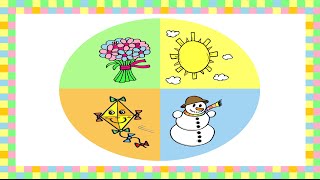
Anhand einer Jahresuhr werden die Veränderungen der Natur, des Wetters und der Freizeitaktivitäten für Kinder im Lauf der Jahreszeiten erklärt. Einfache, leicht zu lernenden Sätze sind mit liebevoll gestalteten Bildern untermalt. Viel Spaß!

  • Video
  • Beginner
  • German
Eugeniia Klimutina
Eugeniia Klimutina
0
31
spoon
  • English

spoon

столовые приборы: spoon, jug, glass...

  • Theory with exercises
  • Beginner
  • English
Anna Snim
Anna Snim
0
31
Exploring the history and industry of chocolate.
  • English

Exploring the history and industry of chocolate.

BOB DOUGHTY: I'm Bob Doughty. SHIRLEY GRIFFITH: And I'm Shirley Griffith with EXPLORATIONS in VOA Special English. Today we travel around the world exploring the history of chocolate. Its story begins with a plant whose scientific name, Theobroma cacao, means "food of the gods." For centuries, people have been enjoying the rich flavor of chocolate, a product made from this plant. Join us as we tell about the history of chocolate and how it is produced. We will also meet Jane Morris, a chocolate maker in Washington, DC. (MUSIC) BOB DOUGHTY: Most people today think of chocolate as something sweet to eat or drink than can be easily found in stores around the world. It might surprise you that chocolate was once highly treasured. SHIRLEY GRIFFITH: Historians believe the Maya people of Central America first learned to farm cacao plants around two thousand years ago. The Maya took the cacao trees from the rainforests and grew them in their gardens. They cooked the cacao seeds, then crushed them into a soft paste. They mixed the paste with water and flavorful spices to make an unsweetened chocolate drink. The Maya poured the chocolate drink back and forth between two containers so that the liquid had a layer of bubbles, or foam. Cacao and chocolate were an important part of Maya culture. There are often images of cacao plants on Maya buildings and art objects. Ruling families drank chocolate at special ceremonies. And, even poorer members of society could enjoy the drink once in a while.

  • Podcast
  • Intermediate
  • English
Eugeniia Klimutina
Eugeniia Klimutina
0
31
PET
  • English

PET

All parts pet test reading, speaking, grammar , listening

  • Theory
  • Intermediate
  • English
Darina Gribanova
Darina Gribanova
0
31
Deutschland: Geographie und Kultur
  • Geography

Deutschland: Geographie und Kultur

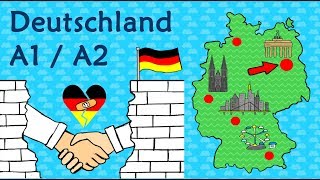
Illustrierte Lektion zum Thema Deutschland: Lage in Europa, Flagge, Städte, Geographie, Sehenswürdigkeiten, Nachbarländer, Staaten und Nationalfeiertag - einfach verständlich für Kinder. Viel Spaß!

  • Video
  • level.elementary school
  • German
Eugeniia Klimutina
Eugeniia Klimutina
0
31
I Have a Dream
  • English

I Have a Dream

Have you a dream? I mean, is there something that you would really like to do in your life – such as travelling round the world, or writing a best-selling novel, or climbing Mount Everest, or learning a new language. Good. It is important that we have dreams like these. But what would you do to achieve your dream. Would you, for example, walk out of your job so that you could do the thing you really want to do? Hmm. That might be difficult. How would you get the money you need to live on? And suppose you had a well-paid and very important job. Would you give that job up to pursue your dream? This morning's newspapers tell us about someone who has done just that. His name is Paul Drayson. He is 47 years old. He started his career as a businessman, and he was very successful. He made a fortune as boss of a company which makes equipment for giving people medical injections without sticking a needle into them. Then he became interested in politics. He gave a lot of money to the Labour Party. The government made him a member of the House of Lords, which is the upper chamber of the British parliament. (This means that he is now Lord Drayson, and not plain, ordinary Mr Drayson.) Then Lord Drayson became a minister in the government, at the Ministry of Defence. He was responsible for buying equipment for the British armed forces. Both the government’s supporters and his opponents said that he was good at his job. He obviously had a bright political career ahead of him. But Lord Drayson had a dream. It was a dream about driving motorcars very fast. He bought a 6-litre Aston Martin racing car. He drove it around race tracks. He competed in races; then he started to win some of the races, and this year he came third in the British GT championship. (The GT championships are for cars which are nearly the same as cars which you can drive on normal roads). People who know him say that, as a racing driver, Paul Drayson is both brave and intelligent.

  • Podcast
  • All levels
  • English
Andrei Scherbak
Andrei Scherbak